BLOG
Understanding R-Values and Insulation Standards in Queensland
What R-Values Actually Measure
An R-value measures how effectively a material slows the movement of heat. In Australian homes, insulation products are tested under controlled conditions to determine their thermal resistance.
There are two main types of R-values used in insulation:
Material R-value, which refers to the insulation product itself
Total system R-value, which includes roofing materials, wall systems, air gaps, and other building components
This distinction is important because insulation performance depends heavily on how the product is installed within the structure. Even high rated insulation can perform poorly if gaps, compression, or ventilation problems exist.
Bulk insulation products such as glasswool, polyester, and wool batts rely on trapped air pockets within the material to slow heat movement. Reflective foil products work differently by reducing radiant heat transfer when installed with appropriate air gaps.
Queensland Climate Zones Affect Insulation Requirements
Queensland contains multiple climate zones ranging from warm temperate regions to hot humid coastal areas. Insulation recommendations differ depending on the local climate and building design.
South East Queensland, including Brisbane and Logan, generally experiences hot summers combined with mild winters. In these conditions, ceiling insulation is often the most important component because roof spaces absorb large amounts of solar heat.
The National Construction Code sets minimum energy efficiency requirements for new homes and major renovations. These requirements include minimum total R-values for roofs, walls, and floors depending on the building location and construction method.
Metal roofs, tile roofs, lightweight wall systems, and slab construction all influence the required insulation approach. Roof colour and roof pitch can also affect overall thermal performance calculations.
Ceiling Insulation Usually Provides the Greatest Impact
In Queensland homes, ceiling insulation typically contributes more to thermal comfort than wall insulation because the roof space receives direct solar exposure throughout the day.
Common ceiling insulation products installed across South East Queensland include:
Glasswool batts
Polyester insulation batts
Earthwool products
Reflective foil laminates
Combined blanket systems beneath metal roofing
Ceiling insulation must be installed evenly across the cavity without compression or open gaps. Recessed lighting, air conditioning ducts, and stored items frequently interrupt insulation coverage in older homes.
Ventilation also affects performance. Roof cavities with poor airflow can accumulate extreme heat during summer, reducing the overall benefit of ceiling insulation alone.
Moisture Control Is Part of Thermal Performance
Thermal efficiency and moisture control are closely connected in Queensland conditions. Humid air, condensation beneath metal roofing, and limited roof ventilation can affect insulation performance over time.
Bulk insulation that becomes damp loses some of its thermal resistance. Persistent moisture exposure may also contribute to mould growth, timber deterioration, and ceiling damage inside poorly ventilated roof spaces.
Sarking installed beneath roof sheeting helps reduce condensation risks while reflective foil products can reduce radiant heat transfer entering the cavity. Correct placement and drainage paths remain important for these systems to work effectively.
Wall insulation systems also require moisture management consideration, particularly in coastal areas exposed to humid conditions and salt laden air.
DISCOVER WHAT OUR CUSTOMERS HAVE TO SAY ABOUT US
REVIEWS
REVIEW US ON GOOGLE
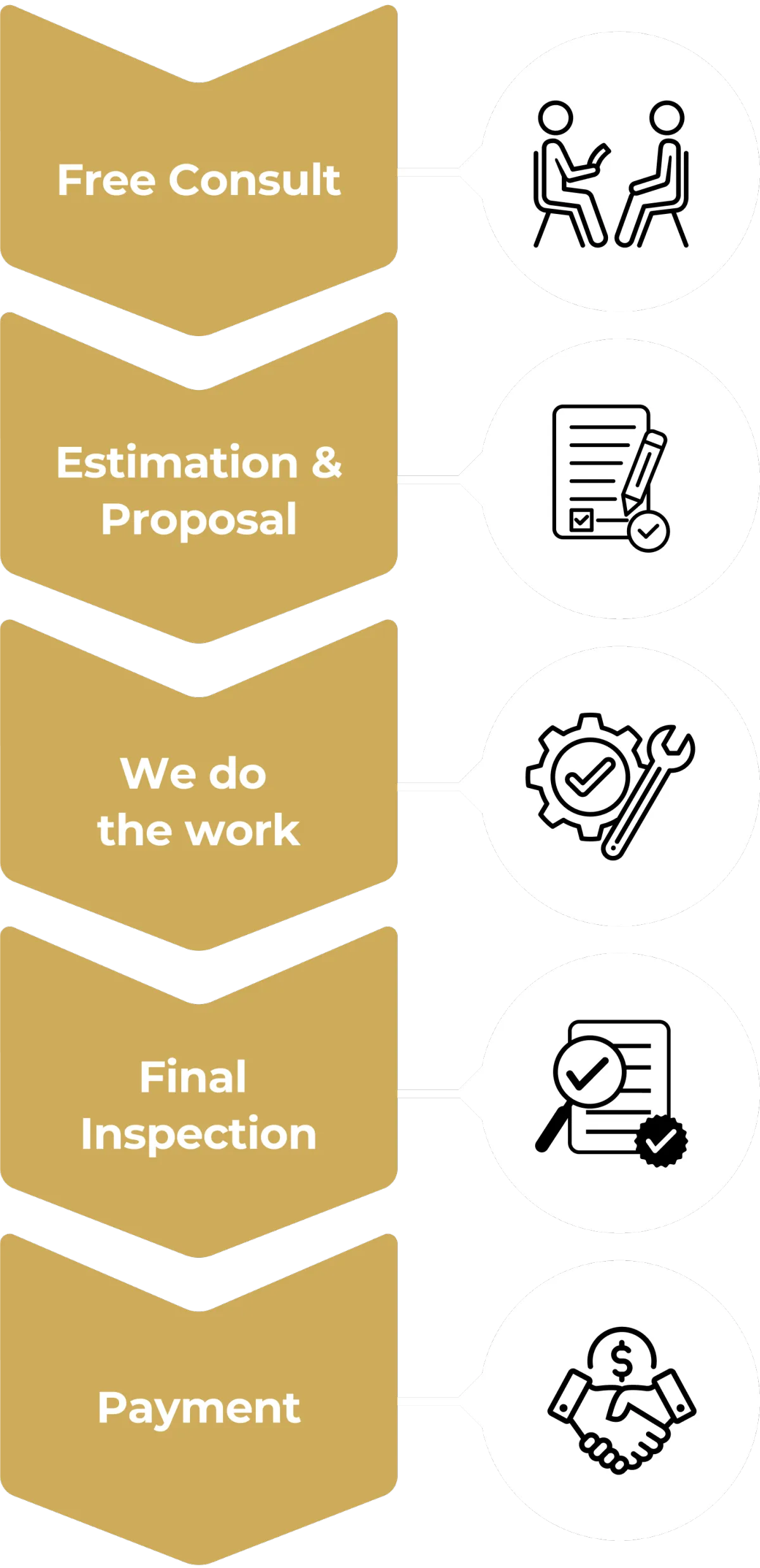
our process
Our process is simple and only contains a few simple steps

proudly serving these areas
Northern NSW
Gold Coast
Ipswich
Brisbane
Logan
READY TO take the next step?
get a free quote TODAY!